1,2,3 Go!
A dynamic game to improve responsiveness and coordination.
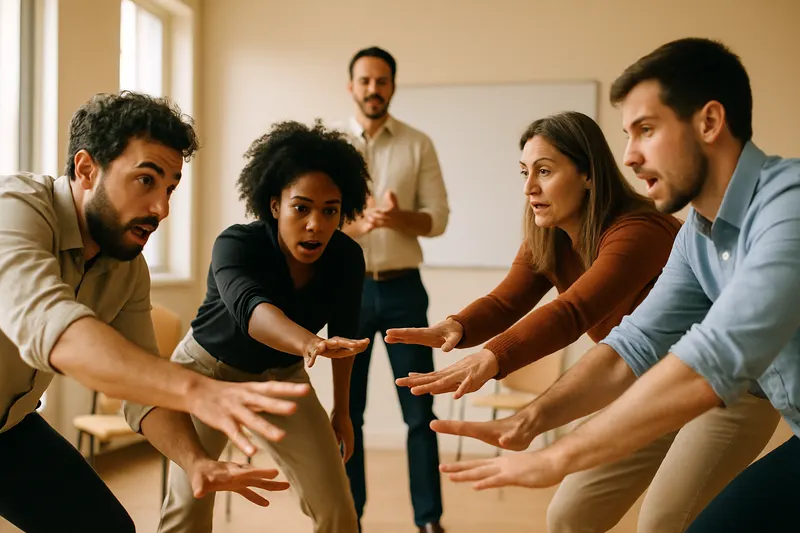
1,2,3 Go! is a game of attention and synchronization that develops active listening and concentration among participants. Suitable for everyone, it creates a playful atmosphere while strengthening team cohesion. Ideal for breaking the ice or energising a workshop.
Walkthrough
- 1
Introduction
5 minThe facilitator explains the objective of the game: to improve coordination and listening within the group. They clarify the basic rules: participants must synchronise to say '1, 2, 3, Go!' at the same time, without prior preparation. The facilitator emphasises the importance of listening and observation.
Tip — Adopt an enthusiastic tone to motivate participants from the start.
- 2
Team Formation
5 minDivide participants into small groups of 4 to 6 people. Each group forms a circle to facilitate interaction. The facilitator ensures that the groups are balanced in terms of dynamics and diversity.
Tip — If the group is too large, consider creating several sub-groups to maintain an effective dynamic.
- 3
First Trial Round
10 minEach group starts to play. Participants must agree to say '1, 2, 3, Go!' in perfect synchronisation. The facilitator observes and encourages the groups, highlighting successes and challenges encountered. This phase allows participants to familiarise themselves with the game.
Tip — Encourage participants to focus on rhythm and listening rather than speed.
- 4
Refinement Round
10 minGroups attempt to perfect their synchronisation. The facilitator can introduce variations, such as adding gestures or increasing the tempo. This stage aims to strengthen cohesion and active listening.
Tip — Offer additional challenges for groups that succeed quickly, such as adding words or movements.
- 5
Collective Feedback
10 minGather all participants for a collective feedback session. Each group shares their impressions and the strategies used to improve coordination. The facilitator highlights key learnings and moments of success.
Tip — Encourage participants to provide constructive feedback and share their personal feelings.
- 6
Conclusion
5 minThe facilitator concludes by summarising the benefits of the game for listening and coordination. They invite participants to reflect on how these skills can be applied in their daily work. Thank the participants for their engagement.
Tip — End on a positive note by congratulating the group for their efforts and team spirit.
Variants
- Introduce synchronized movements with the words to increase difficulty.
- Play in competition mode between groups to see which synchronises best.
- Add disruptive sound or visual elements to test concentration.
Debrief guide
- What did you feel while trying to synchronise with your teammates?
- Which strategies were most effective in improving coordination?
- How did active listening play a role in your performance?
- What challenges did you encounter and how did you overcome them?
- How can you apply these coordination skills in your daily work?