The Agile Museum
Explore the challenges of traditional projects through an immersive role-playing game.
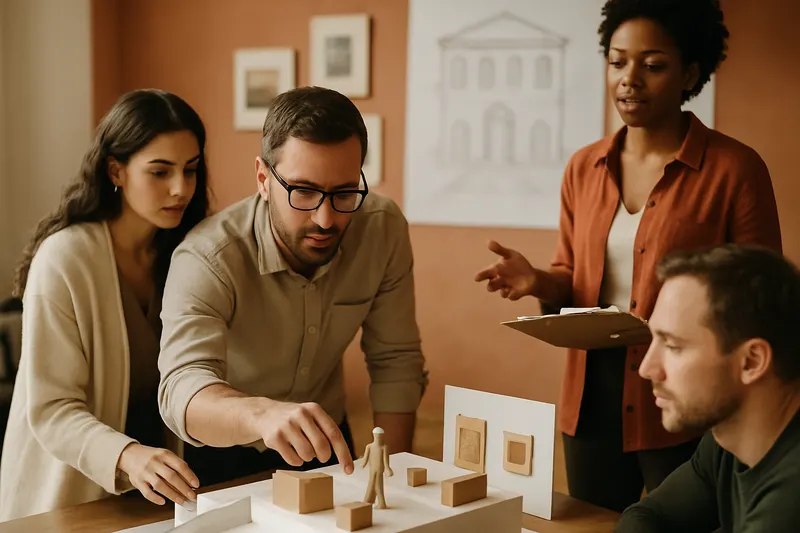
The Agile Museum is a serious game that immerses participants in the various phases of a traditional project. Each player embodies a specific phase, such as definition, specification, implementation, or testing, and experiences the challenges and interactions unique to each stage. This game highlights the limitations of traditional approaches and encourages reflection on more agile and adaptive project management methods.
Walkthrough
- 1
Introduction and Role Assignment
15 minThe facilitator begins by explaining the purpose of the game: to experience the different phases of a traditional project. They briefly present each phase (definition, specification, implementation, testing) and assign a role to each participant. "You will embody a phase of the project and experience its challenges and interactions with other phases." Participants familiarise themselves with their role by reading a descriptive sheet provided by the facilitator.
Tip — Ensure that each participant fully understands their role by asking a few verification questions.
- 2
Definition Phase Simulation
20 minThe participant in charge of the definition phase starts by outlining the overall objectives of the project and the needs of the users. Other participants can ask questions to clarify expectations. "Your role is to clearly define what the project needs to achieve." This phase highlights the importance of a good initial understanding of needs.
Tip — Encourage participants to ask open-ended questions to foster a rich discussion.
- 3
Specification Phase Simulation
20 minThe participant responsible for the specification writes detailed specifications based on the previously defined needs. "Ensure that each requirement is clear and testable." Other participants (especially those in implementation) can suggest adjustments to ensure that the specifications are feasible.
Tip — Highlight common communication issues between the definition and specification phases.
- 4
Implementation Phase Simulation
20 minThe participant in charge of implementation begins to develop the project according to the provided specifications. "Your goal is to turn the specifications into a tangible product." This phase highlights the challenges related to implementing the specifications and any discrepancies with the definition phase.
Tip — Encourage participants to identify gaps between the specifications and the reality of development.
- 5
Testing Phase Simulation
20 minThe participant responsible for testing evaluates the final product to ensure it meets the specifications and initial needs. "Check that the final product aligns with the defined expectations." This phase often reveals discrepancies between the delivered product and the initial expectations.
Tip — Encourage the testing participant to be thorough and document any discrepancies observed.
- 6
Conclusion and Reflections
15 minThe facilitator invites each participant to share their impressions of the experience in their role. "What did you feel while embodying your phase?" This discussion allows for highlighting the limitations of traditional approaches and introducing agile concepts that could improve the process.
Tip — Link the discussion to concrete agile practices that could address the identified issues.
Variants
- Add a retrospective phase where participants suggest improvements for each phase.
- Integrate a surprise element by introducing last-minute changes to the specifications.
- Allow participants to change roles midway to experience another phase of the project.
Debrief guide
- What difficulties did you encounter in your phase of the project?
- How did the interactions between the phases influence the project's progression?
- What were the main discrepancies identified between the initial expectations and the final product?
- Which elements of the traditional process could be improved by agile practices?
- How could you apply the lessons from this game to your current projects?
- Which phase do you think was the most critical, and why?
- What skills were necessary to overcome the challenges encountered?