
Battery
Two weeks to see what drains, what recharges, and what a team can change.
In short. Battery is a serious game (team building) for 4–30 participants, lasting 60–80 min. Created by serious-games.com. Use it for: engagement & motivation, collaboration, confiance.
Card by serious-games.com, updated 22 November 2026. Original game by serious-games.com.
Battery simulates two working weeks, with their demands, schedules, interruptions, and relationships. Each participant manages an individual battery, but the score is collective. The game makes the impact of team practices on available energy tangible. It is for teams, managers, HR, and trainers who want to open a practical discussion without individual diagnosis.
The full kit as a free PDF
Printable cards, rules, timed running order, facilitator sheet and canvases. Enter your email to download it.
No spam. Unsubscribe in one click.
Walkthrough
- 1
Set the frame
5 minWelcome participants, announce the duration, and form teams of 4 to 6. Hand out the “My Battery” sheets. Remind everyone that the situations are fictional and that no one will comment on their real energy. “We are going to observe a work system, not evaluate people. Your game battery starts at 10.”
Tip : Be very clear about the frame: it makes play possible without personal exposure.
- 2
Explain a game turn
10 minShow the four card types. Explain the 5 days, 2 activities per day, 2 actions, the shared hand of 5 recharges, mutual support, the day-3 event, and what happens at 0. “Every decision matters, but you will see that the collective has more weight than isolated small gestures.”
Tip : Run a mini-example with an activity card and a recharge before starting.
- 3
Play week 1
18 minFacilitate the 5 days quickly. At the start of each day, reveal 5 recharges. Each player draws 2 activities, adjusts their battery, then spends or gives their actions. On day 3, draw an event. “Decide quickly: you have few actions, and not everyone will get the ideal recharge.”
Tip : Announce the days out loud. The pace prevents overly long debates.
- 4
Calculate and observe
5 minEach team adds up the batteries and subtracts 5 points for each player who reached 0. Ask what drained the most energy and where mutual support changed something. “Record the score, but above all the mechanisms: what drained the battery fastest?”
Tip : Do not debrief too early: keep the energy for the comparison with week 2.
- 5
Choose 3 norms
8 minReveal the 8 norms. Each team chooses 3 for week 2. Invite them to choose based on the irritants observed in week 1, not only on the strongest effect. “A norm is a team promise: it must be useful, understandable, and verifiable.”
Tip : If a team hesitates, ask: which tag cost you the most?
- 6
Play week 2
18 minReset batteries to 10 and replay 5 days with the 3 chosen norms. Apply reductions when activities appear. Draw an event on day 3. “The same ups and downs can occur, but your team system is no longer the same.”
Tip : Have players name the norm used each time: it anchors the rule-effect link.
- 7
Debrief and transfer
15 minCompare the scores from the two weeks. Facilitate the debrief in three phases: feel, understand, transfer. End with the “Our Team Charter” template and one to four rules to test. “What will we keep from this simulation to protect real work, without turning the game into a diagnosis?”
Tip : Look for modest, observable rules rather than broad principles.
Variants
- Remote version : Use a shared board with one column per player, a digital draw pile, and battery tokens. Cards are drawn by the facilitator, and decisions are made in subgroups.
- Large group : Play in parallel teams of 4 to 6. Display only the final scores and one norm chosen by each team to keep the debrief flowing.
- Manager as observer : A manager can observe without playing and note the collective mechanisms they spot. They only comment during the debrief, after players have spoken.
- Real team workshop : During transfer, keep only rules that can be tested for two weeks. Avoid overly broad commitments: a useful norm must be visible in calendars or practices.
Debrief guide
- When did you feel your battery was becoming hard to protect?
- What did you feel when a colleague gave you an action, or when you could not help?
- Which tags weighed most: requests, schedules, interruptions, relationships, or work?
- What changed between week 1 and week 2 thanks to the norms?
- In the game, what was invisible at the start but costly by the end?
- What real collective rule could protect several people without making work more complex?
- How will we check in one month that this rule is really helping the team?
- What signal should alert us that a norm needs to be adjusted or abandoned?
Facilitator reviews
No review yet. Have you run this game? Your feedback will help the next facilitators.
Similar games
Same objectives or same category, to vary or follow up.

Earn as Much as You Can (the X-Y Game)
An intense X-Y dilemma to reveal trust, competition, and the meaning of 'you'.

1-2-4-All
Bring out everyone's ideas in 12 minutes, without letting the more talkative take over.

Psychological Safety Workshop
A workshop to surface speaking-up risks within the team and turn observations into observable norms.

The Ball of Wool (the Team Web)
A circle, a ball of wool, and a visible web to feel the connections and interdependence of a team.
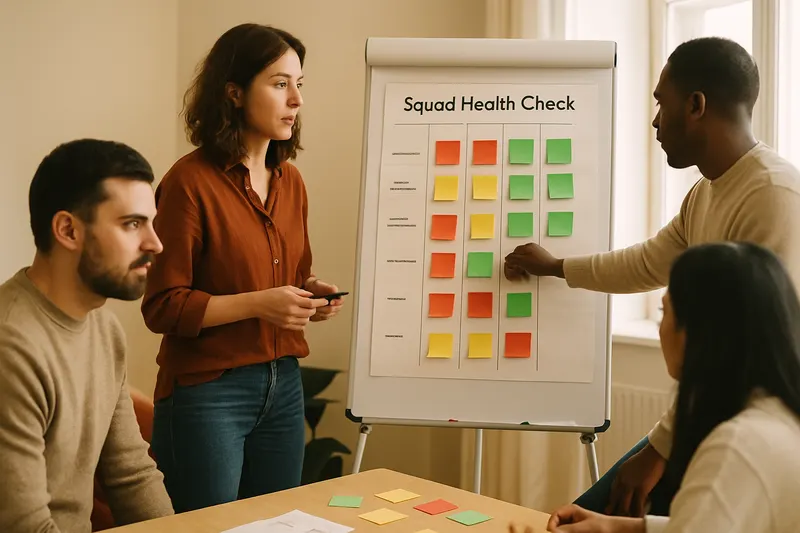
Spotify Squad Health Check
Get a squad discussing ten indicators, then visualise colour and trend without turning the exercise into a judgement.

Low-tech Social Network
A wall of drawn profiles to make existing connections visible and trigger new ones.